Wood, bamboo and wood bending
(back)

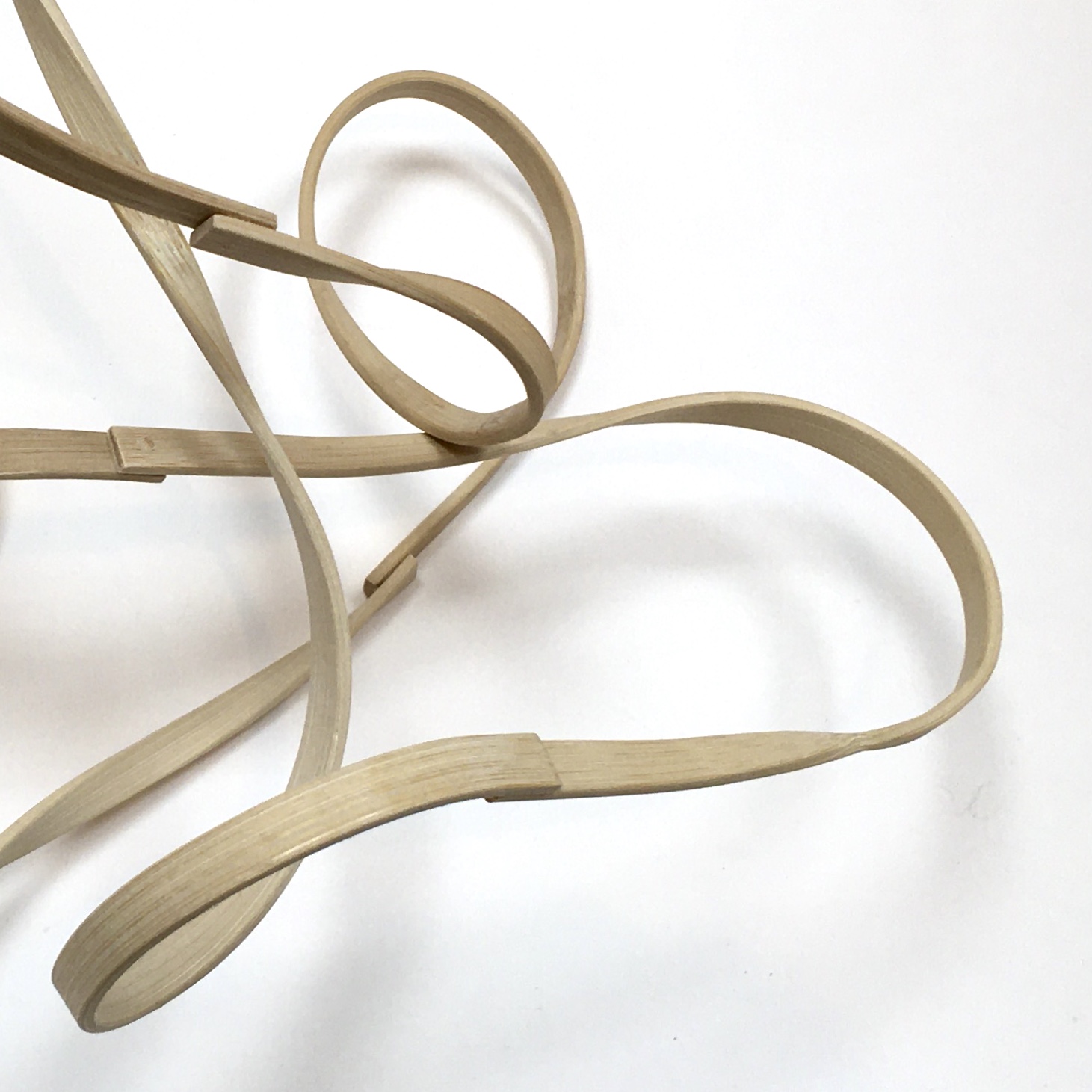

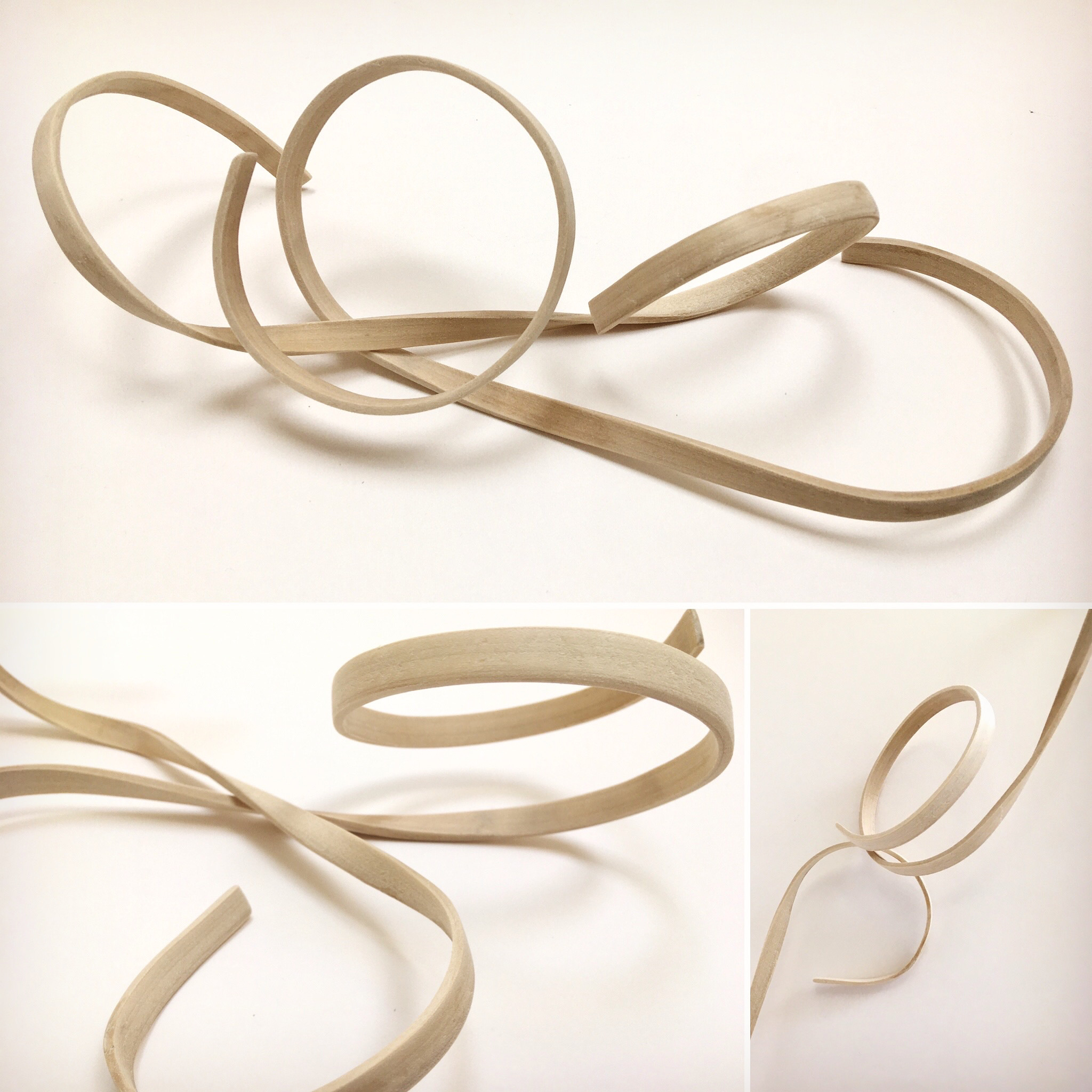

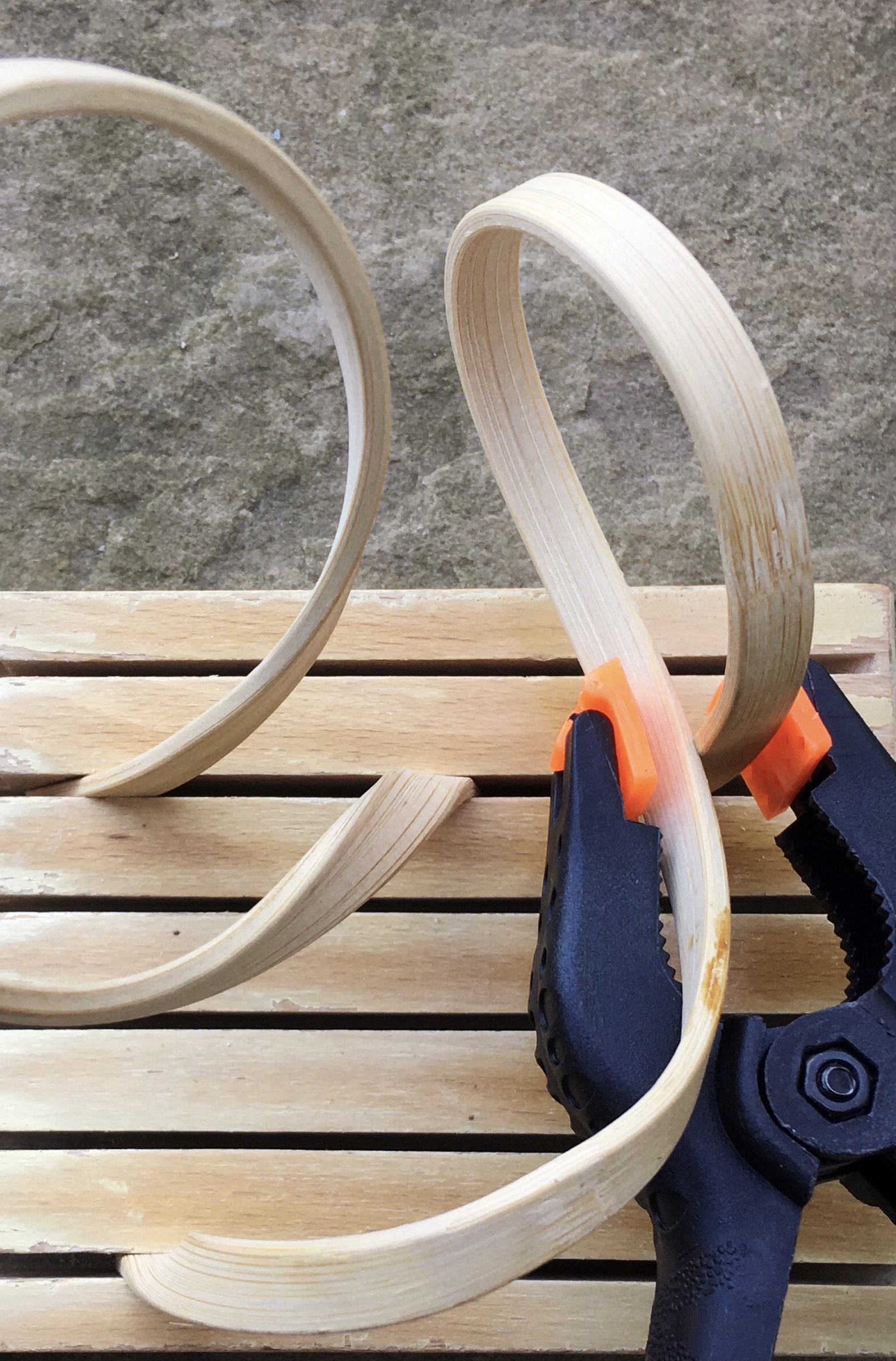
Images: Sample of wood and bamboo strips & a steaming box.
Wood is organic and was once part of a living tree, growing, eating, moving and reproducing and, with heat and water, it can be bent and retain its form. The bending process re-enacts certain orientations that the plant may have taken when alive to adapt to its environment in search of light, water or nutrients. As such, the process captures the energy the plant would have deployed in the past to adapt and stay alive. Working with wood in this way is quite exciting because it gives a sense that the order of things is being challenged and it brings the wonder of Einstein’s emotional quote to mind that ‘the distinction between past, present, and future is only a stubbornly persistent illusion.’ Einstein wrote this in 1955 in a letter addressed to the sister in the family of his best friend (Michele Besso) who had just died.
The wood strips are off-cuts from the local sawmill. The bending process does not involve steaming per se, as it draws up a lot of energy. Instead I use a tray to soak the wood over time and then iron it. The water soaked up by the wood heats up very quickly and prepares the wood for bending. This process is not as reliable as steaming the wood in a box (above images). There is a lot of breakage and I am limited with the thickness of the wood – I cannot bend strips of wood over 5mm thick. However, most of the broken parts are used in the work and the energy consumed in this process is a fraction of what it would be with steaming. As for the thickness of the wood, it means my work is very light, making it easy to hang and transport, with a low overall carbon footprint.
Each strip of wood has a variable ductility and breaking points. This may be due to how it was dried in the first place or down to the direction of the grain. The strip can also snap where there are knots.
The science
The bending process does not only change the appearance of the wood, it also alters its internal structure temporarily by shifting and re-organising bonds at a nanoscopic level. When the wood is heated a profound change occurs to the Lignin (hard structure) at a very tiny scale weakening or breaking bonds which enable the cellulose bundles to slide past each other when we bend the wood. When it cools the Lignin bonds re-establish and the bend become permanent (unless we re-heat the wood and bend it again!).
Lignin is a complex organic polymer deposited in the cell walls of many plants, making them rigid and woody. It is a class of complex organic polymers that form key structural materials in the support tissues of most plants. Lignin is particularly important in the formation of cell walls, especially in wood and bark, because it provides rigidity and do not rot easily.
 Frederique Jones