
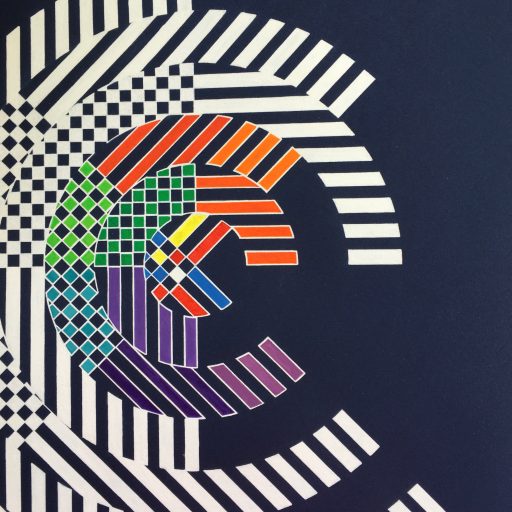
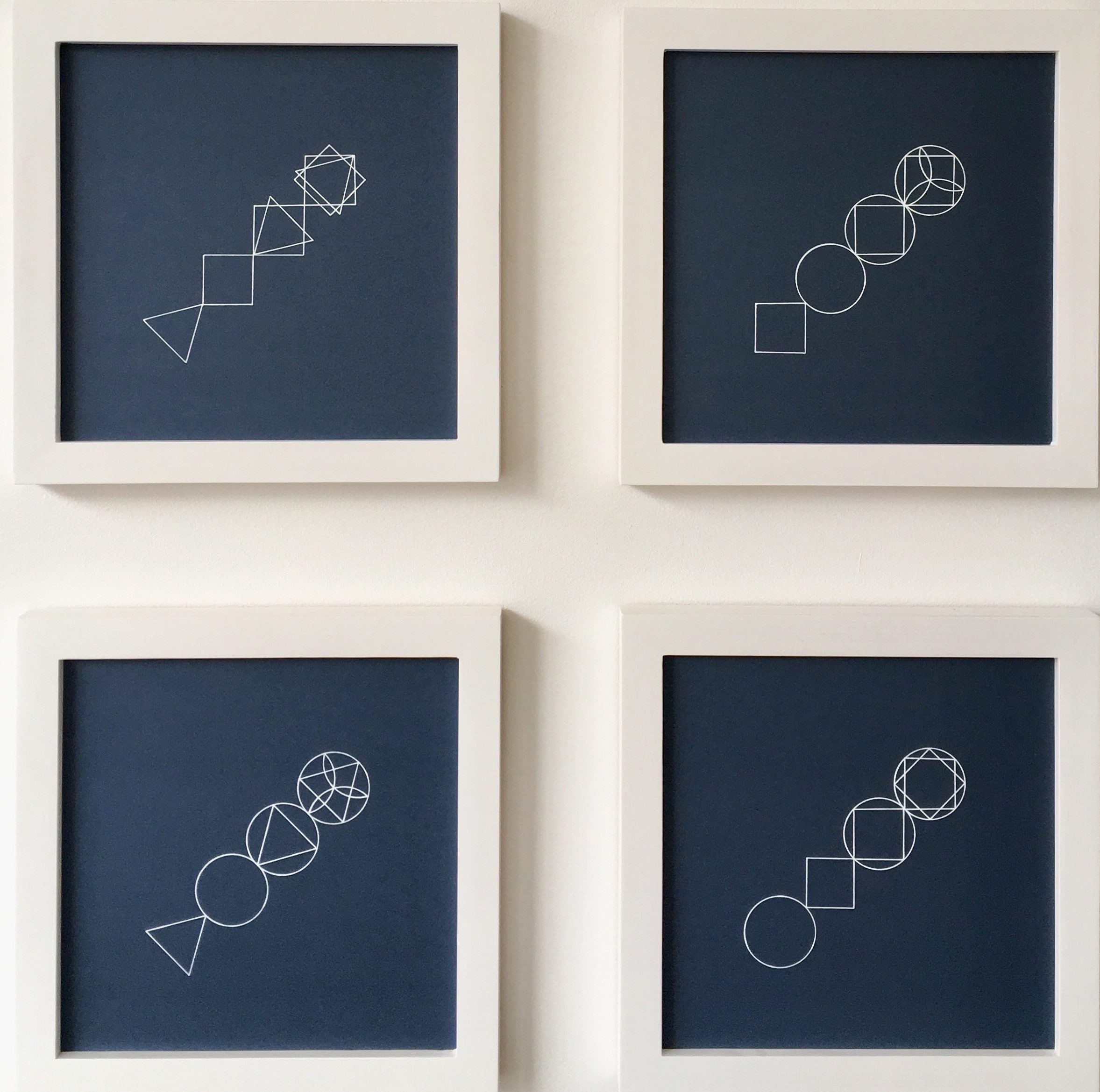
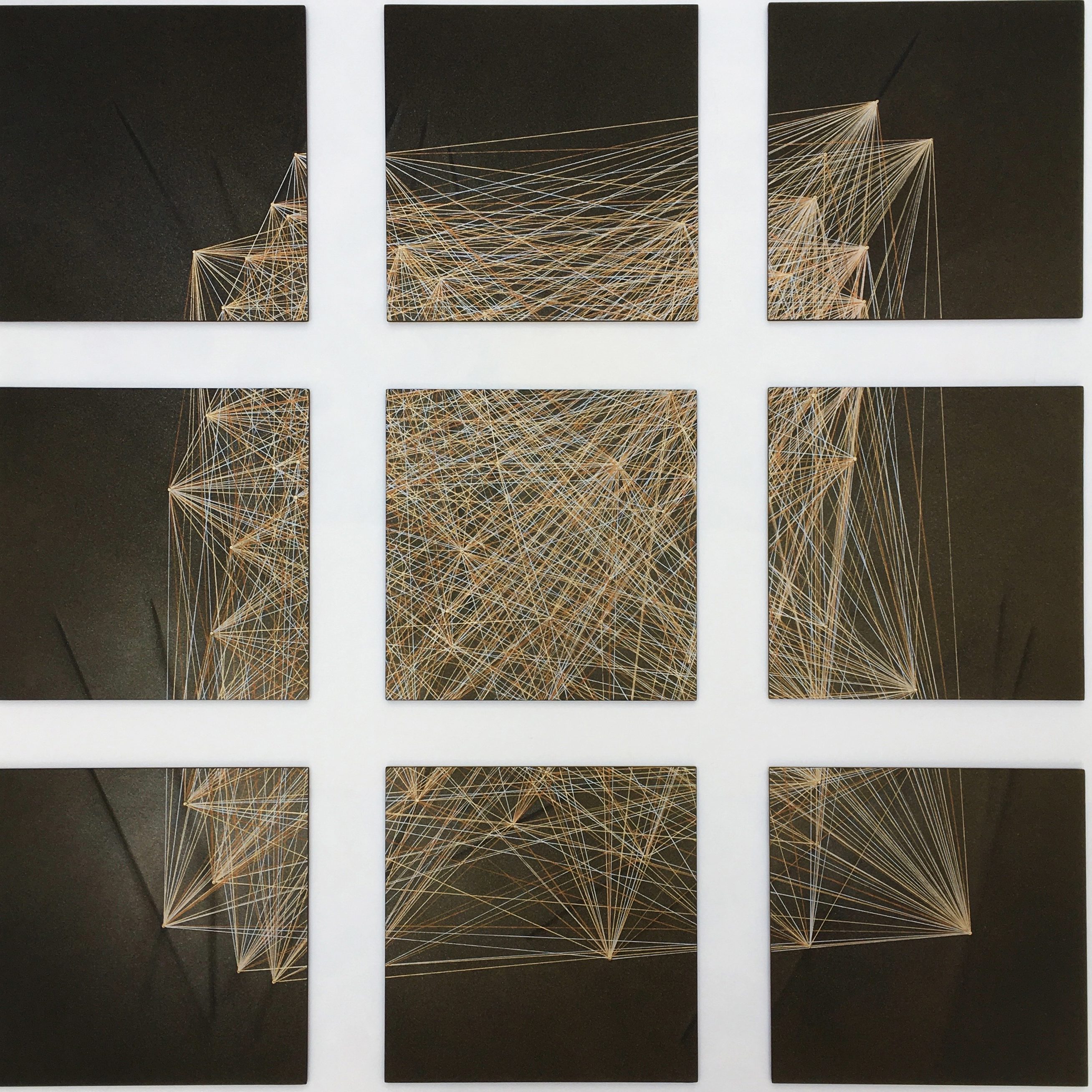
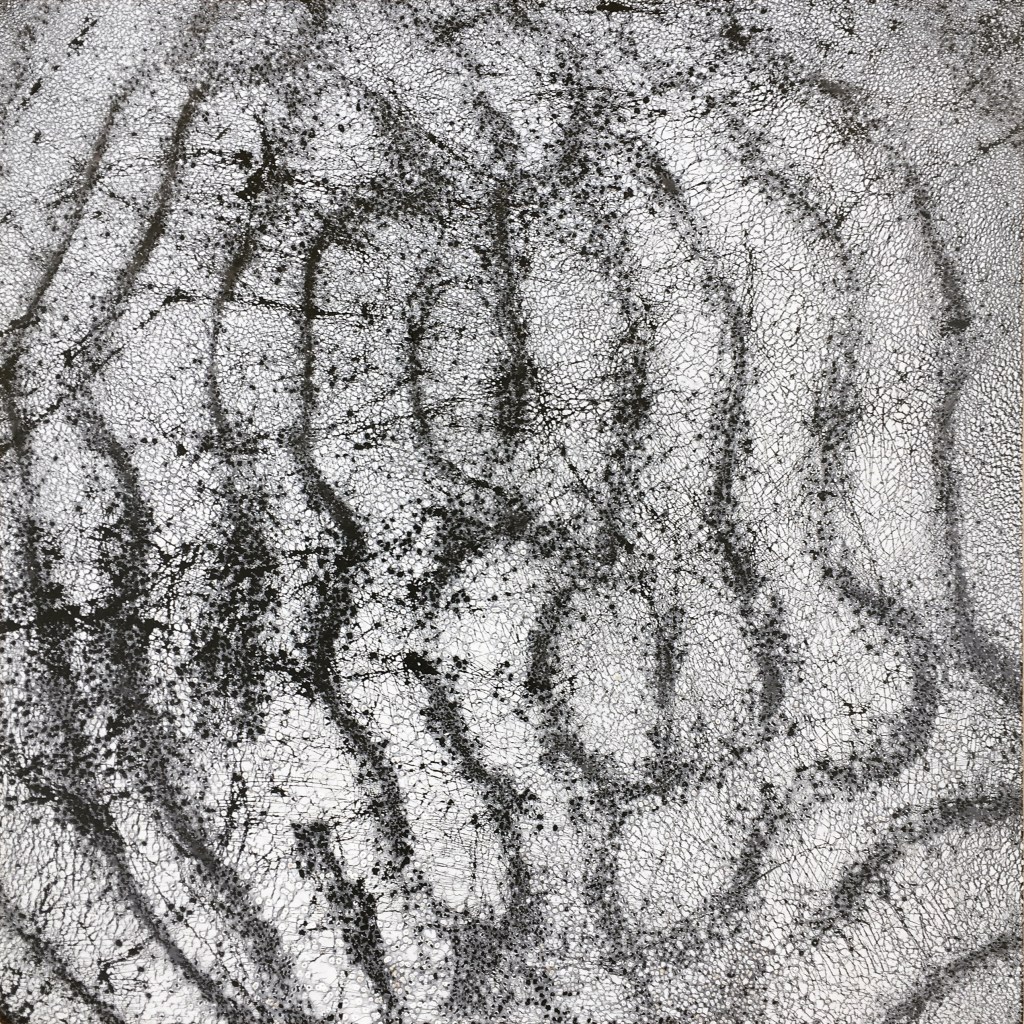
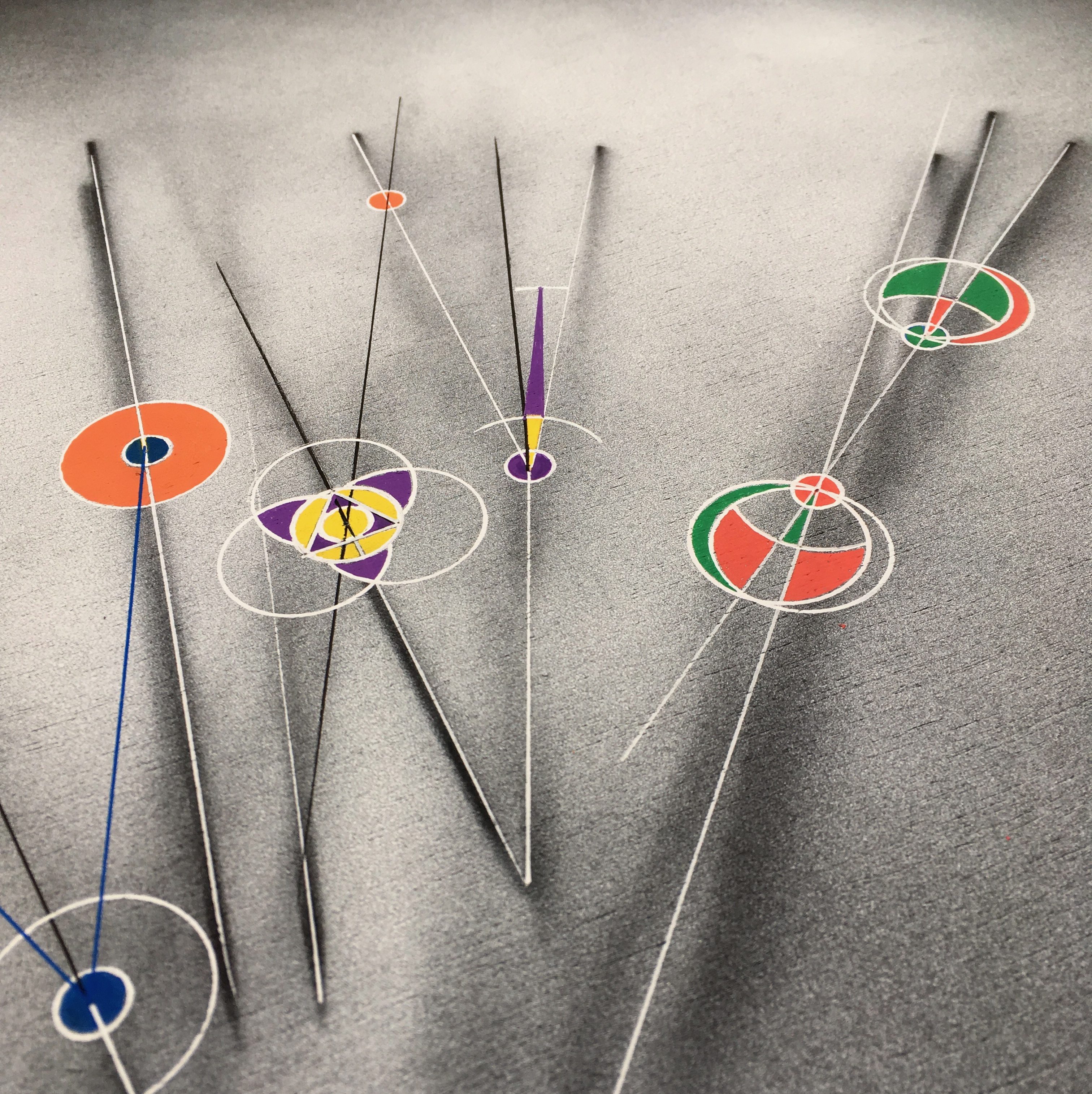
Before discovering the 3D printing filaments, my work was predominantly two-dimensional, with diagrams that resembled abstract geometric compositions. They were sometimes reminiscent of non-verbal reasoning puzzles and were purposely not readily comprehensible to prompt the viewer to engage in analytical reasoning.
The importance of the grid
The grid is the omnipresent matrix that holds the potential of future making. After a drawing is completed, the grid is discarded. Yet, the work follows its footprint and, as such, forever holds its essence. The two layers (grid and work) encapsulate past and future in a fluid now, depending on which layer the viewer is observing from. On a more literal level, the repeated patterns, emerging from the grid, take up a predictable amount of time in the making: The ink on the surface of the paper becomes a transcript of duration where space and time are intimately interwoven.
In astronomy, it is used to illustrate the fabric of spacetime, which either expands or contracts in the presence of matter. In Albert Einstein’s theory of relativity, time is woven together with the three dimensions of space, forming a bendy, four-dimensional spacetime continuum, a “block universe” encompassing the entire past, present, and future. As a result, each slice of the block refer to different spacetime coordinates that can be accessed in the present. The weaving aspect has also becomes an important consideration in my work.
 Frederique Jones