3D work with PLA filament
(back)
The discovery of the 3D printer filaments was pivotal for my art practice. Prior to that, my work was predominantly two-dimensional, featuring diagrams that resembled abstract geometric compositions. These were at times reminiscent of non-verbal reasoning puzzles, purposely not readily comprehensible, encouraging the viewer to engage in analytical reasoning.
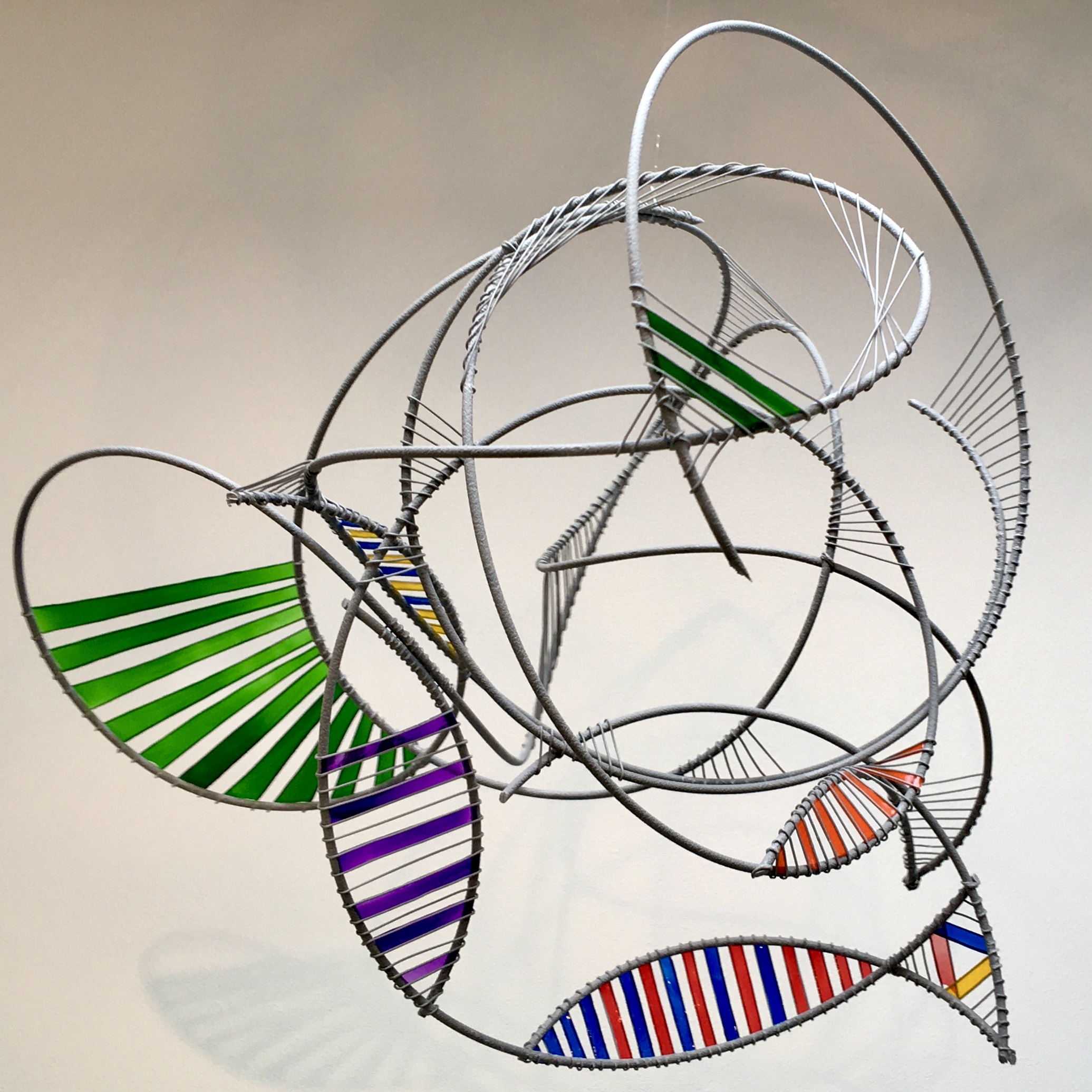

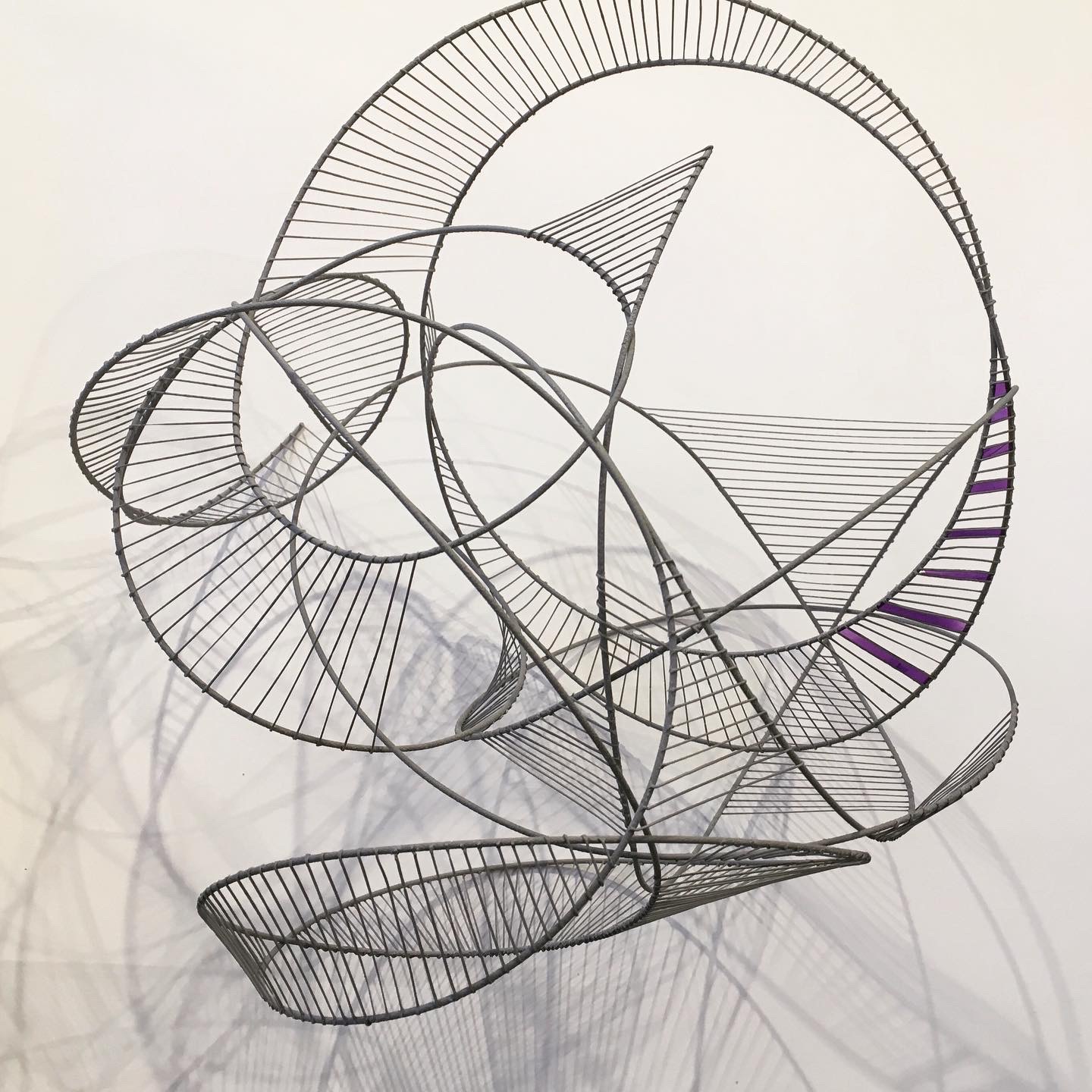
With these filaments, which I called three dimensional ink, my diagrams lifted off the surface of the paper. While retaining the aesthetic of the line, they became these three-dimensional, rhythmic and dynamic forms, evoking the spontaneity of rapid scribbles and characterised by lightness and transparency.
Processing the filaments through the 3D pen enables solder-like connections that hold the raw filaments in place and help generate a form. The introduction of translucent paint added another layer to this three-dimensional experience as it occupied the spaces between the processed filaments and stretched in multiple directions. These filaments are also a versatile medium as other materials can be mixed in at factory level (e.g. stone, clay, cement or cork powder…) giving the filament the appearance of these materials. However, the drawbacks of this extraordinary medium lie in its sustainability and fragility issues, leading me to explore other materials better suited for both sustainability and work development. For more information on PLA ink, click here.
Beautiful Mind 2020
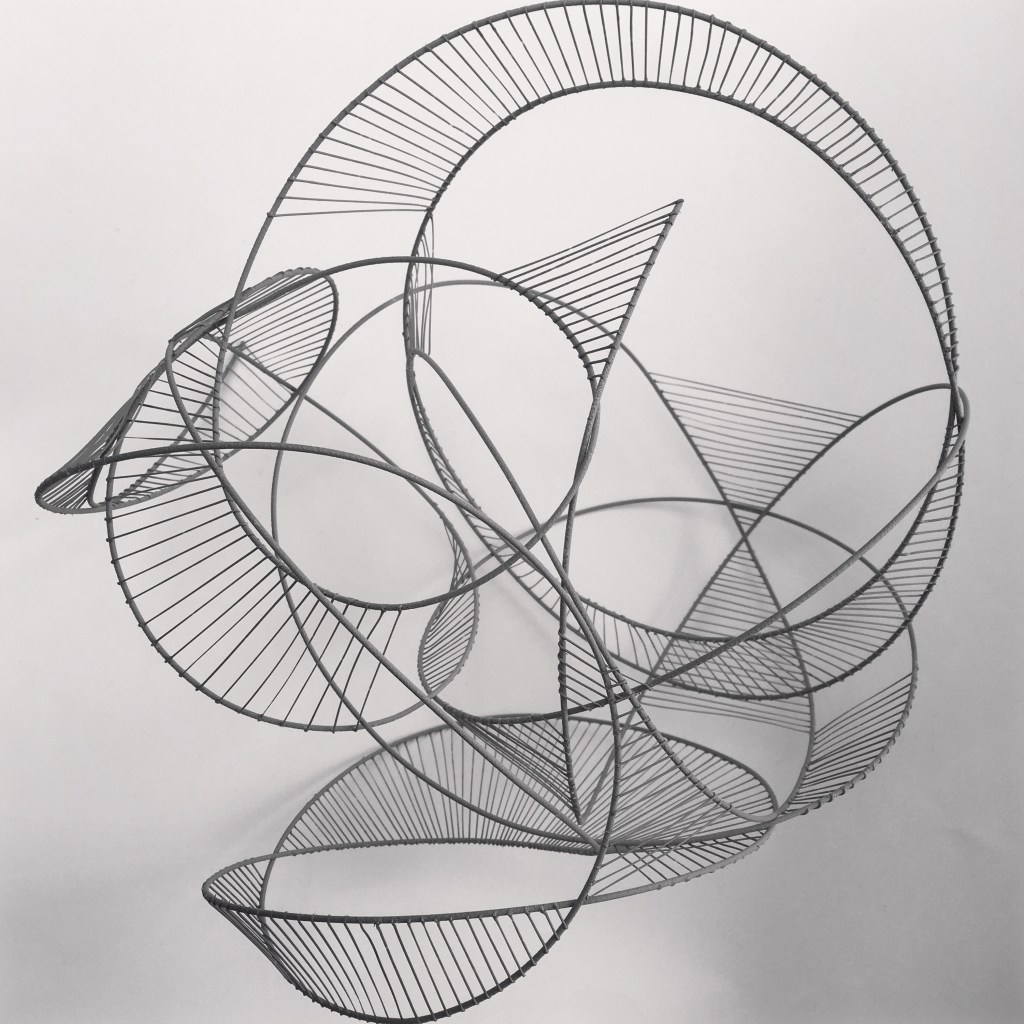
When going in a straight line is not an option anymore, when you can’t tell what is real and what is not, when your mind is your jailor. I made this piece in response to my daughter’s profound struggle with severe OCD and how her intrusive thoughts were not only terrifying but also stuck in an unending loop, rendering her both mentally and physically paralysed with fear.
The title ‘beautiful mind’ directly references the American drama (directed by Ron Howard) which is in part based on the biography “A Beautiful Mind” by Sylvia Nasar. The biography and the film relates events in the life of Mathematician American Nobel Prize winner John Forbes Nash Jr., whose innovative work on game theory in mathematics was in many ways overshadowed by decades of mental illness.
Connected dots in space 2020
(PLA), modular piece, 30cm x 80cm – height without the adjustable hanging wire.
Lines are nothing but connected dots which give rise to shapes and forms in space and time. The space is divided by regular successive segments that hold the form together.
These three loops have been shaped by the throw of a 20-sided dice: Each side corresponds to a specific instruction regarding the size and progression of a new loop.
 Frederique Jones